
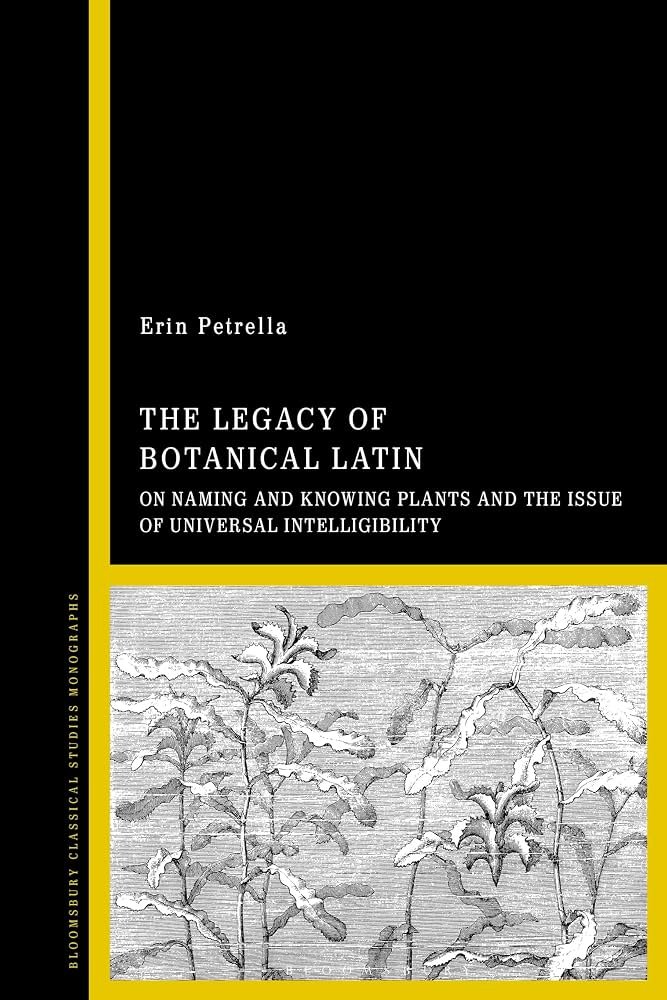
“Tracing the development of botanical Latin and nomenclature from antiquity until the present day, this book interrogates the long-standing notion of universal intelligibility – the idea that when one is describing, illustrating and naming plants, they are able to be understood by anyone. The field of botany has used Latin as a language of expression since its inception in the late 15th century. By the 20th century, however, botanical Latin had become little more than a set of rules and recommendations for the composition of scientific names and diagnoses. This, combined with the waning of Latin as a lingua franca, had an unexpected result: the collapse of the ideal of universal intelligibility, which had long been assumed to be embedded in the Latin language.
Erin Petrella looks at the origins of this ideal, along with other key features of botany, from antiquity through the Renaissance, up to the contemporary scientific discourse, which addresses philosophical and political issues such as decolonization and the re-privileging of indigenous methods and naming conventions. Primarily studying the development and formalization of Latin as the language of botany, Petrella also focuses on the premise that plant names, descriptions and illustrations should all contribute to the plant's discoverability and knowability.” - Bloomsbury Publishing
You can purchase the book from Bloomsbury here: https://www.bloomsbury.com/uk/legacy-of-botanical-latin-9781350509665/
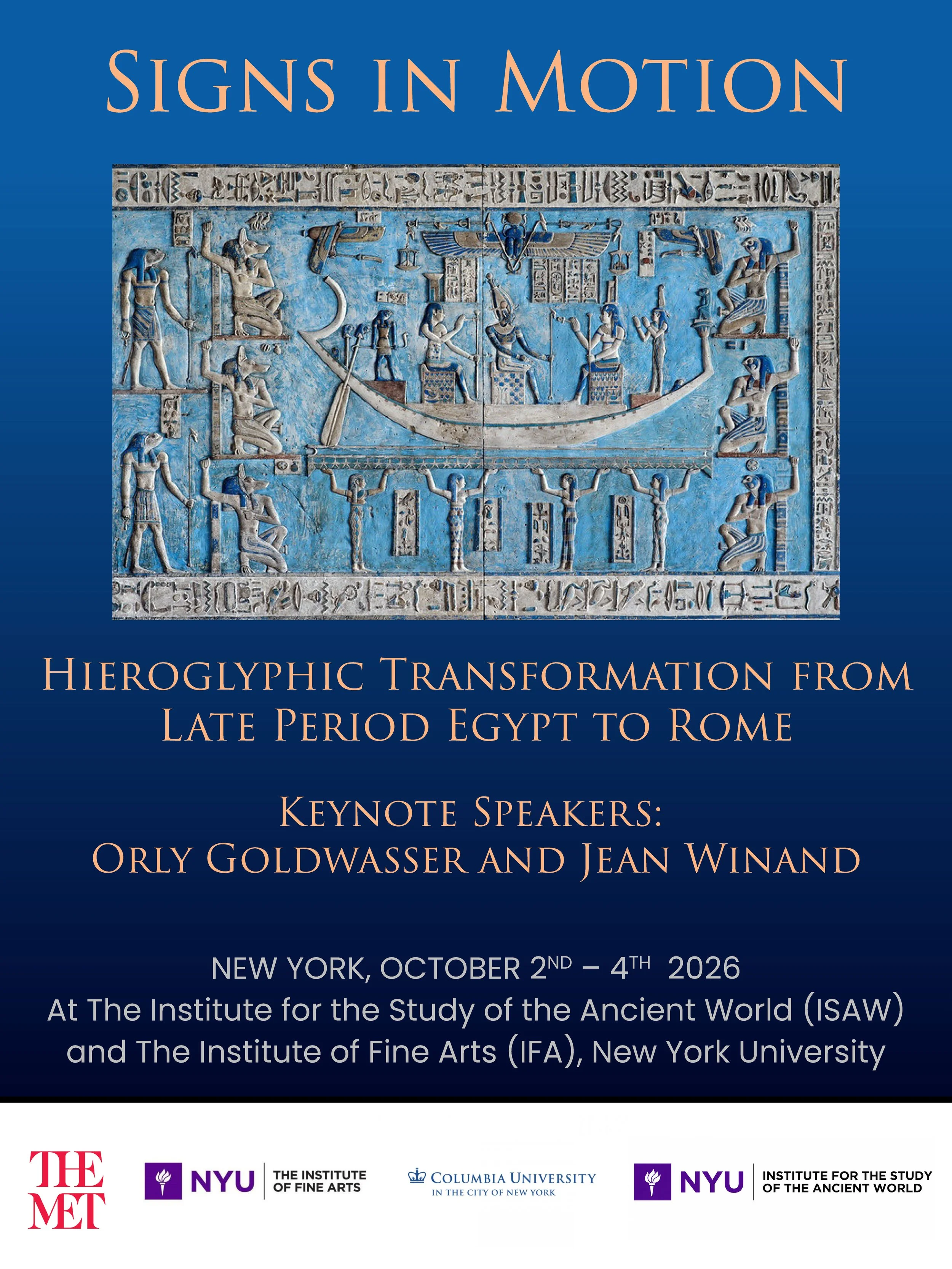
Signs in Motion: Hieroglyphic Transformation from Late Period Egypt to Rome
New York, October 2–4, 2026
The Institute for the Study of the Ancient World (ISAW) and The Institute of Fine Arts (IFA), New York University
“Signs in Motion” will bring together scholars of Late Period, Hellenistic, and Roman Egypt and scholars of the wider Greco-Roman world to reflect on Egyptian hieroglyphic writing. The conference will take place at the Institute for the Study of the Ancient World (ISAW) and the Institute of Fine Arts (IFA) at New York University.
“Signs in Motion” examines the changing forms and meanings of hieroglyphic signs from the Late Period through the Roman era, illuminating the intellectual vitality of Egypt’s “last scholars,” their intricate games with signs, and their negotiations with the other cultures active in Egypt. The conference will explore how individual signs developed, disappeared, and were revived; how variations responded to particular monuments, materials, genres, and registers; and how earlier traditions informed the development of Ptolemaic hieroglyphs. At the same time, it will place Egyptian scribal culture within a broader Mediterranean context, asking how Egyptian, Persian, Greek, and Roman linguistic and intellectual traditions interacted within shared imperial frameworks. Particular attention will be given to the transmission of ideas about hieroglyphs, the production of Egyptian writing beyond Egypt itself, and the relationship between local scholarly traditions and Greek and Roman conceptions of the symbolic power of hieroglyphic writing.
Keynote Lectures
Orly Goldwasser
A Window into the Ptolemaic Mind: Woman Classifiers in the Egyptian Script (more about the lecture)
Jean Winand
Why Were Classical Authors So Fascinated with Ancient Egyptian Hieroglyphs?
Together with papers addressing both the Egyptian evidence and the Greek and Latin traditions that engaged with Egypt’s writing system, these lectures will frame a three-day conversation on the transformation, interpretation, and cultural mobility of hieroglyphic signs between the seventh century BCE and the fourth century CE.
“Signs in Motion” has been made possible through the generous support of The Stanwood Cockey Lodge Foundation of the Department
of Classics at Columbia University, The Metropolitan Museum of Art, The Institute of Fine Arts (IFA), and The Institute for the Study of the Ancient World (ISAW) at New York University.
Congratulations, John Ma, FBA!
Our very own Professor John Ma has been elected a Fellow of the British Academy.
Read More Here
Congratulations, John!
Congratulations, Brett, on successfully defending your dissertation and becoming Dr. Brett Stine
On May 27, our very own Brett Stine successfully defended his dissertation to earn his doctoral degree!
Dissertation Title: Skin Deep: Bodily Representations and Surface Poetics in Homer, Hesiod, and the Theognidea
Advisor: Nancy Worman
Wishing you all the best on your new journey, Dr. Stine!

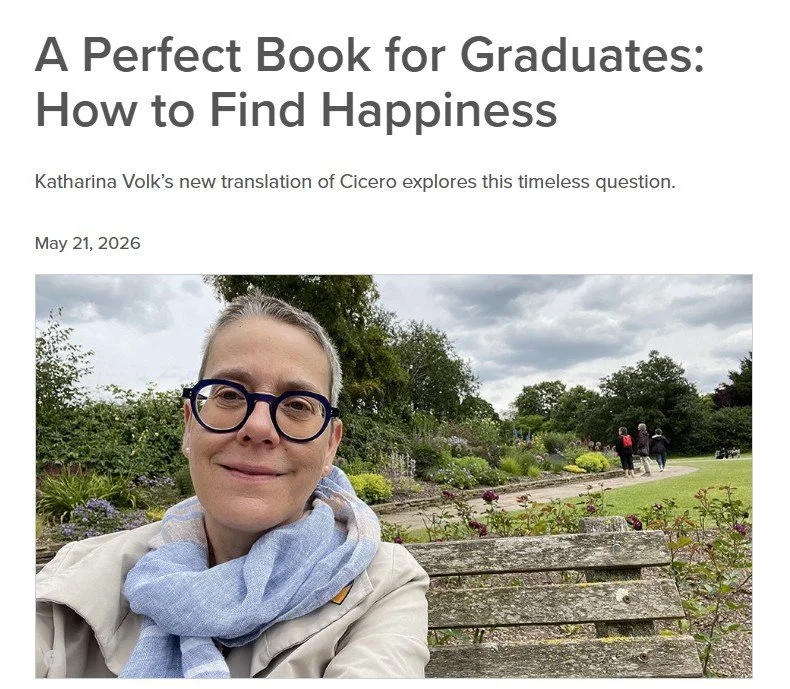
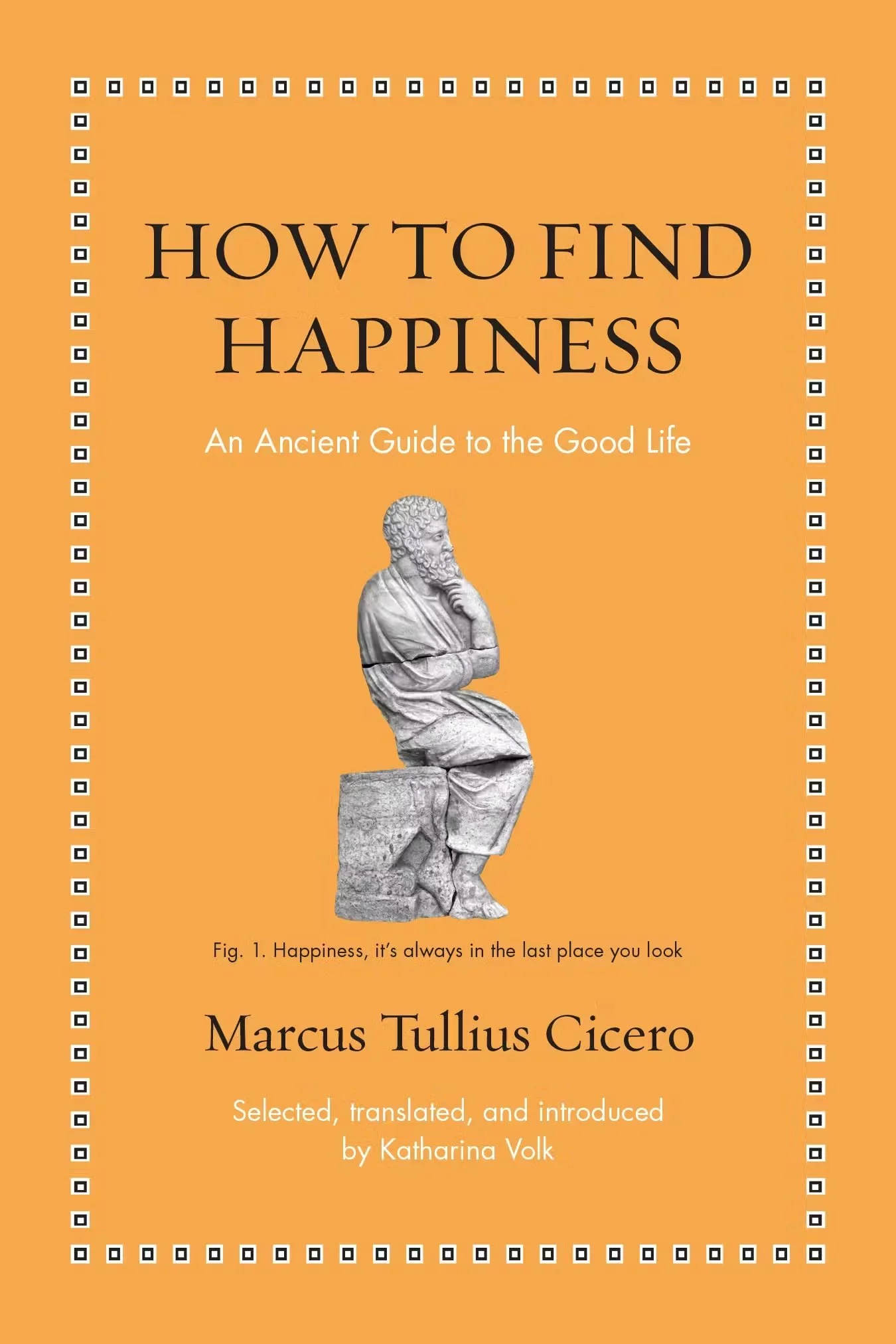
How to Find Happiness: An Ancient Guide to the Good Life by Katharina Volk Columbia News Interview
Professor Volk was interviewed for the Columbia News about her newly published book, ‘How to Find Happiness: An Ancient Guide to the Good Life.'
Congratulations, José, on successfully defending your dissertation and becoming Dr. José Antonio Cancino Alfaro
On May 18, our very own José Antonio Cancino Alfaro successfully defended his dissertation to earn his doctoral degree!
Dissertation Title: Latin Histories of the Americas
Advisor: Katharina Volk
Wishing you all the best on your new journey, Dr. Cancino Alfaro!
New Publication: The Cambridge Companion to Classics and Race co-edited by Rosa Andújar available now!
The Department of Classics is pleased to acknowledge the publication of The Cambridge Companion to Classics and Race, co-edited by our very own Rosa Andújar, Barnard College, Columbia University; Elena Giusti, University of Cambridge; and Jackie Murray, State University of New York, Buffalo.
Congratulations!!!
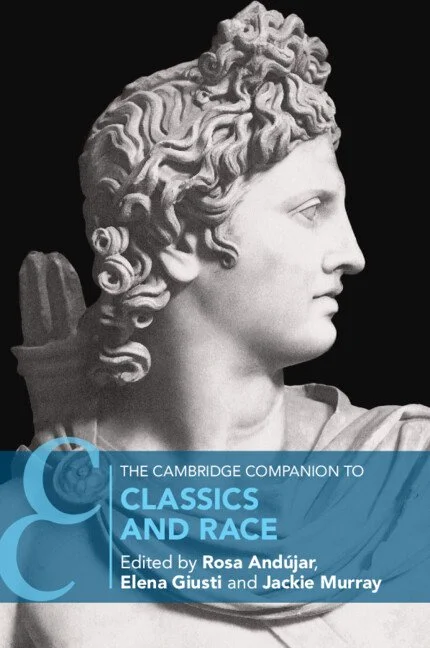
This publication is available in paperback and hardback. Click here to purchase!
Congratulations, Valeria, on successfully defending your dissertation and becoming Dr. Valeria Spacciante!
On April 21st, our very own Valeria Spacciante successfully defended her dissertation to earn her doctoral degree!
Dissertation Title: Bodies of Knowledge - Norm and Resistance in the Greek Novel
Advisor: Nancy Worman
Wishing you all the best on your new journey, Dr. Spacciante!
Congratulations, Nicholas, on successfully defending your dissertation and becoming Dr. Nicholas Koudounis!
On March 24th, our very own Nicholas Koudonis successfully defended his dissertation to earn his doctoral degree!
Dissertation Title: Athens' Barbaroi: Case Studies in Non-Greek Integration in Classical Athens (500-300 BCE)
Advisor: John Ma
Wishing you all the best on your new journey, Dr. Koudounis!

Congratulations, Olivier, on successfully defending your dissertation and becoming Dr. Olivier Bordeleau-Lavoie!
On October 10, 2025, our very own Olivier Bordeleau-Lavoie successfully defended his dissertation to earn his doctoral degree!
Dissertation Title: Towards a reinterpretation of the Epistola Alexandri ad Aristotelem
Advisor: Professor Carmela Franklin
Wishing you all the best on your new journey, Dr. Bordeleau-Lavoie

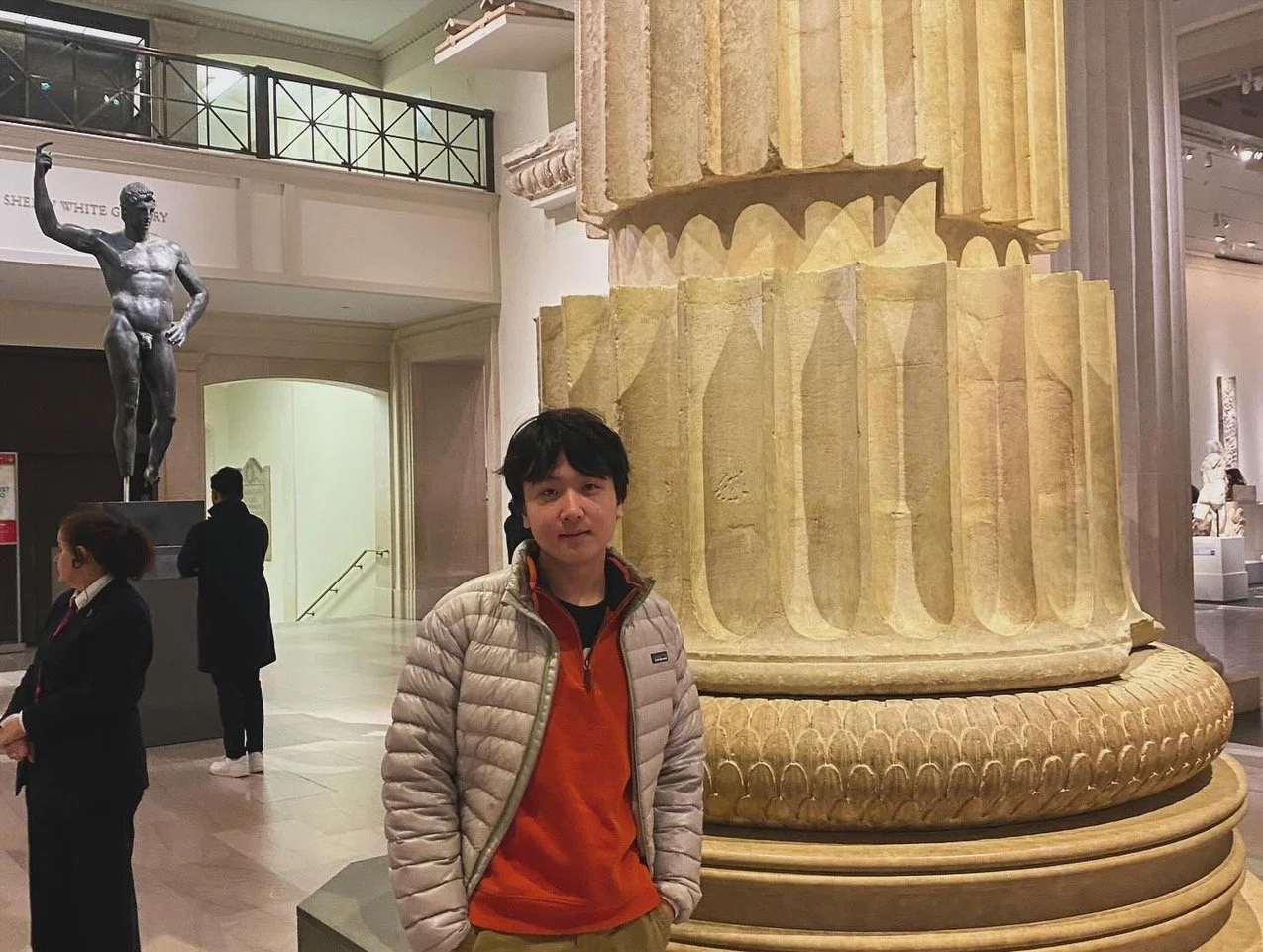
Jasper Chen wins Snowden Scholarship
Congratulations to sophomore Jasper Chen on being awarded the Frank M. Snowden Jr. Undergraduate Scholarship for Summer 2026 by the Society for Classical Studies!
https://classicalstudies.org/awards-and-fellowships/frank-m-snowden-jr-undergraduate-scholarships.
Congratulations Professor Katharina Volk on newly published book: How to Find Happiness: An Ancient Guide to the Good Life
We are beyond excited to share Professor Volk’s newly published book, ‘How to Find Happiness: An Ancient Guide to the Good Life.'
“Of course, we all want to be happy.” So wrote the Roman statesman, orator, and philosopher Marcus Tullius Cicero. He and his fellow Greek and Roman philosophers agreed that the secret to happiness—or what they called the “good life”—is pursuing the “greatest good.” The only problem is that they couldn’t agree on what the greatest good is. Cicero addressed this dilemma by composing a set of dialogues, On the Greatest Good and Evil (De finibus bonorum et malorum), in which he pitted advocates of different philosophical approaches to happiness against one another. Notably, these include the Epicureans (who believe that the greatest good is pleasure) and the Stoics (according to whom it is moral virtue). Rather than choosing sides, Cicero considers the pros and cons of the different philosophies, ultimately leaving it to his readers to make up their own minds. In How to Find Happiness, Katharina Volk offers a vivid new translation of selections from Cicero’s work, complete with an introduction and the original Latin text on facing pages. The result is a lively and engaging debate that invites each of us to discover our own path to happiness.
Professor Elizabeth Scharffenberger Recipient of the 2026 Lenfest Distinguished Faculty Award!
The Lenfest Award was established in 2005 to recognize faculty excellence in teaching, research, and mentorship across the Arts and Sciences. It is the highest honor Columbia bestows upon individual faculty, and it serves as a powerful reminder of the rigorous scholarship, creative energy, selfless commitment to students, and dedication to the Columbia community that are the hallmark of Lenfest awardees.
Professor Scharffenberger was awarded the 2026 Lenfest award for her vital contributions to the Department of Classics through her skillful stewardship of its curricula and programs, her exceptional teaching and scholarship of Ancient Greek language and literature, and her deep empathy and care in advising and mentoring her students.
This year’s recipients include world-renowned scholars, groundbreaking artists, researchers on the cutting edge of scientific discovery, and long-time faculty whose ideas and service have profoundly shaped their departments and students. Arts and Sciences would not be the same without these treasured colleagues. Please join us in congratulating Liz for her many contributions and achievements!
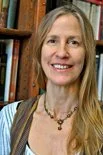
Classics Professor Nikolas Kakkoufa awarded the Community Building and Engagement Award
We are delighted to announce that Professor Nikolas Kakkoufa has been awarded the Community Building and Engagement Award of Columbia’s Humanities division!
This award is given to those who have shown dedication to their students, colleagues, department, campus, or field, through teaching, mentoring, and other service. We cannot think of a worthier recipient than Nikolas, who has valiantly served our Department—its faculty, students, and staff—both through his teaching and through his amazing service in running the Modern Greek program/Hellenic Studies and now as Classics Director of Undergraduate Studies.
The award will be officially given at the Humanities Faculty Recognition Celebration on April 1st, from 5pm to 7pm.
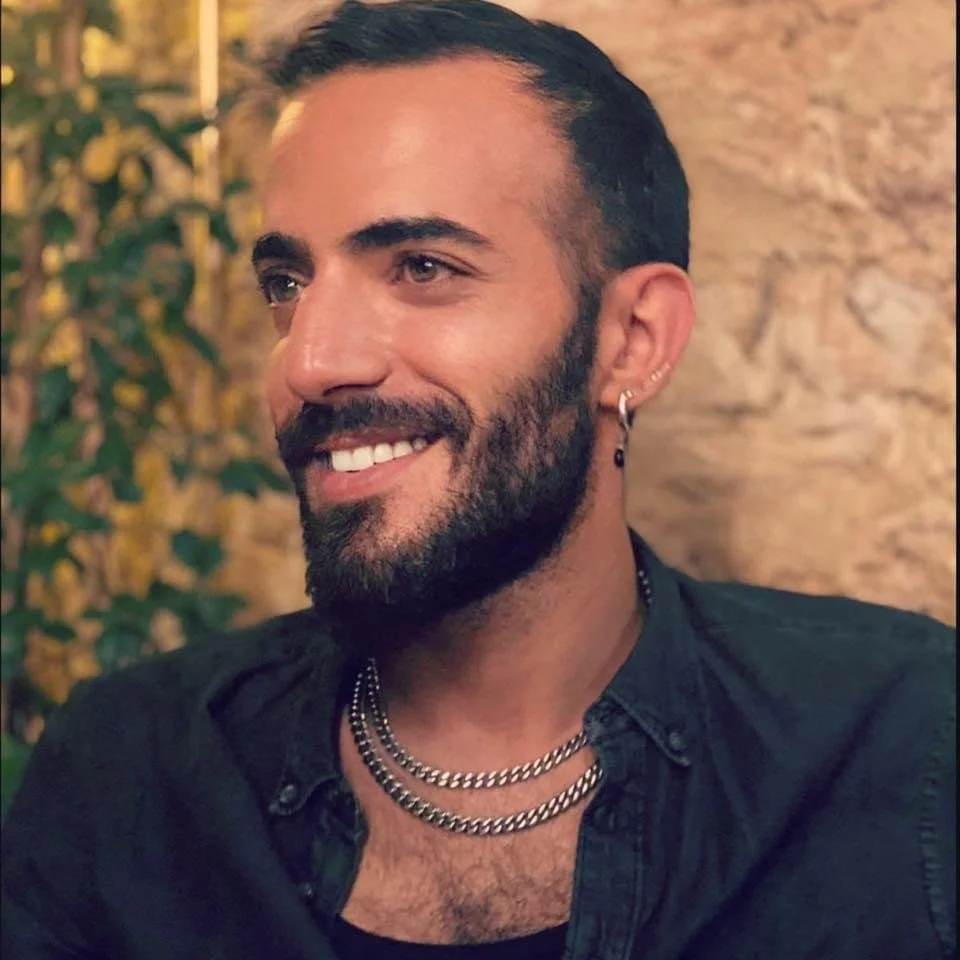
Upcoming New Humanities Faculty Salon features Rosalie Stoner, February 24th!
Tuesday, February 24
6:00-7:30pm
Uris Hall, Room 107 (Calder Lounge)
Please join Division of Humanities Dean Bruno Bosteels in welcoming our newest colleagues from across the division.
Hosted by the Division of Humanities in the Arts and Sciences, the New Humanities Faculty Salons are an opportunity to meet new faculty members as they join the Columbia Humanities community. Learn about their current work while you enjoy conversation, drinks, and snacks with faculty and graduate students. By bringing together scholars from across the Division, we hope to open conversations across the wider Humanities community.
This February, we welcome:
Chika Ogura, Lecturer in Japanese Department of East Asian Languages and Cultures
Ethan Plaue, Assistant Professor Department of English and Comparative Literature
C. Riley Snorton, Professor English and Comparative Literature; Institute for the Study of Sexuality and Gender
Rosalie Stoner, Assistant Professor Department of Classics
Moderated by:
Bruno Bosteels, Dean of Humanities; Jesse and George Siegel Professor in the Humanities
Faculty and graduate students from all divisions are welcome to attend. Wine and snacks will be served.
Registration is required. Register here to attend.
Department Hosts Hodie et Cras Event
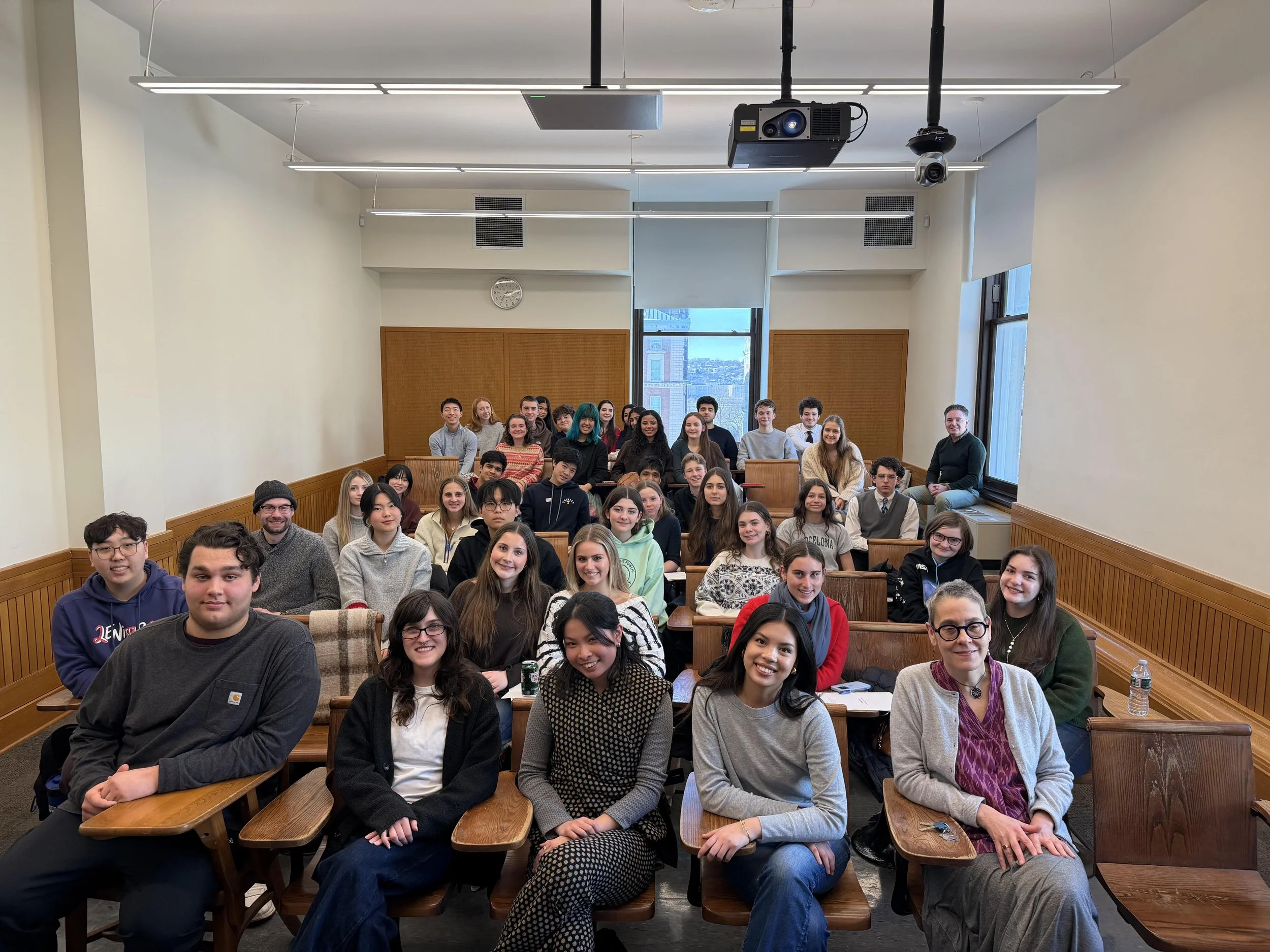
On January 31st, the Department hosted an event under the auspices of the organization Hodie et Cras for high school students interested in Classics at the college level. Dozens of students from all over the eastern seaboard attended. Professors Stoner Van Geel, and Williams offered presentations, and three Classics Majors shared insights into their experience.
Congratulations, Marissa on successfully defending your dissertation and becoming Dr. Marissa Swan
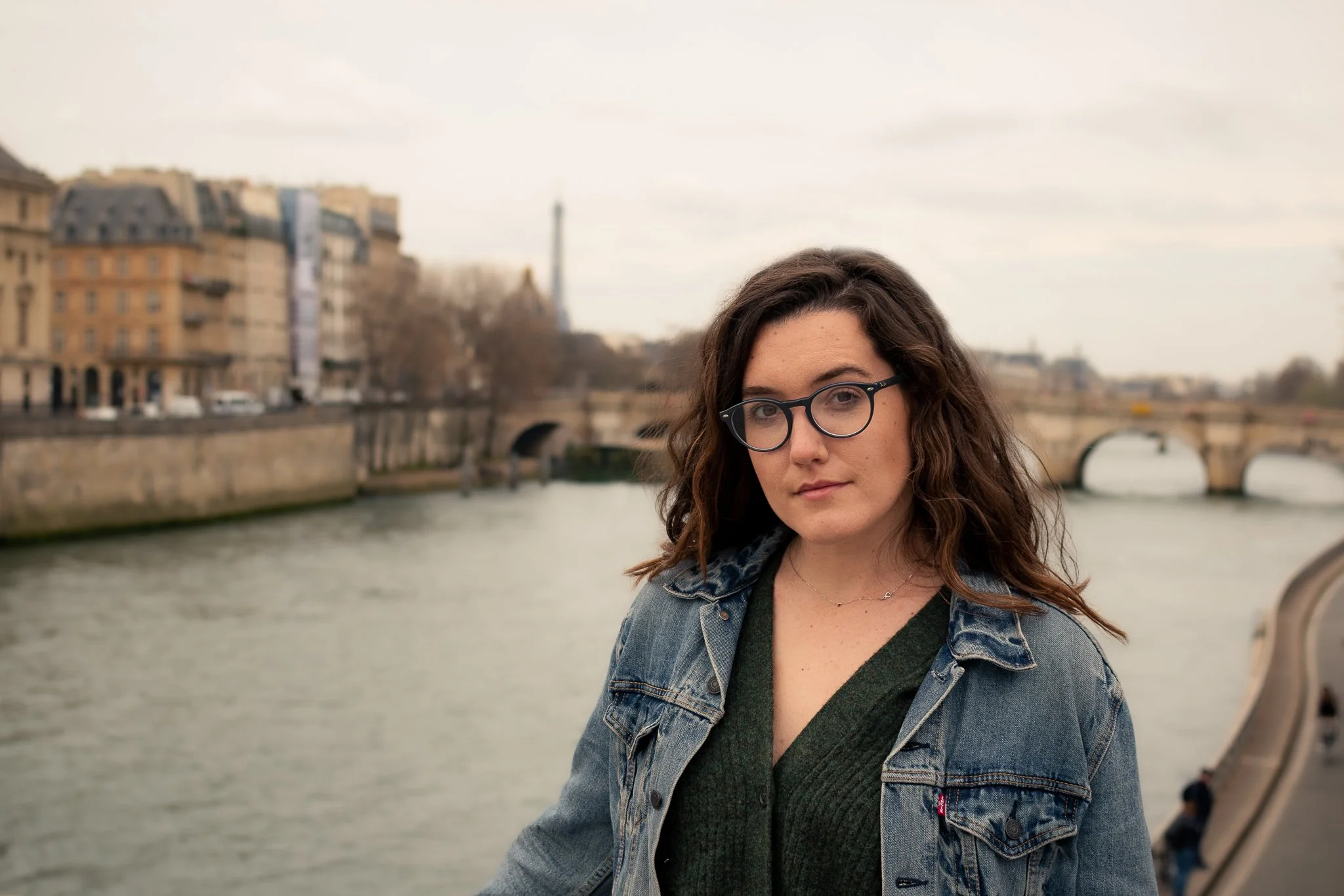
On January 23, 2026, our very own Marissa Swan successfully defended her dissertation to earn her doctoral degree!
Dissertation Title: Body Language: Lactantius and the Corporeal
Advisor: Gareth Williams
Wishing you all the best on your new journey, Dr. Swan!
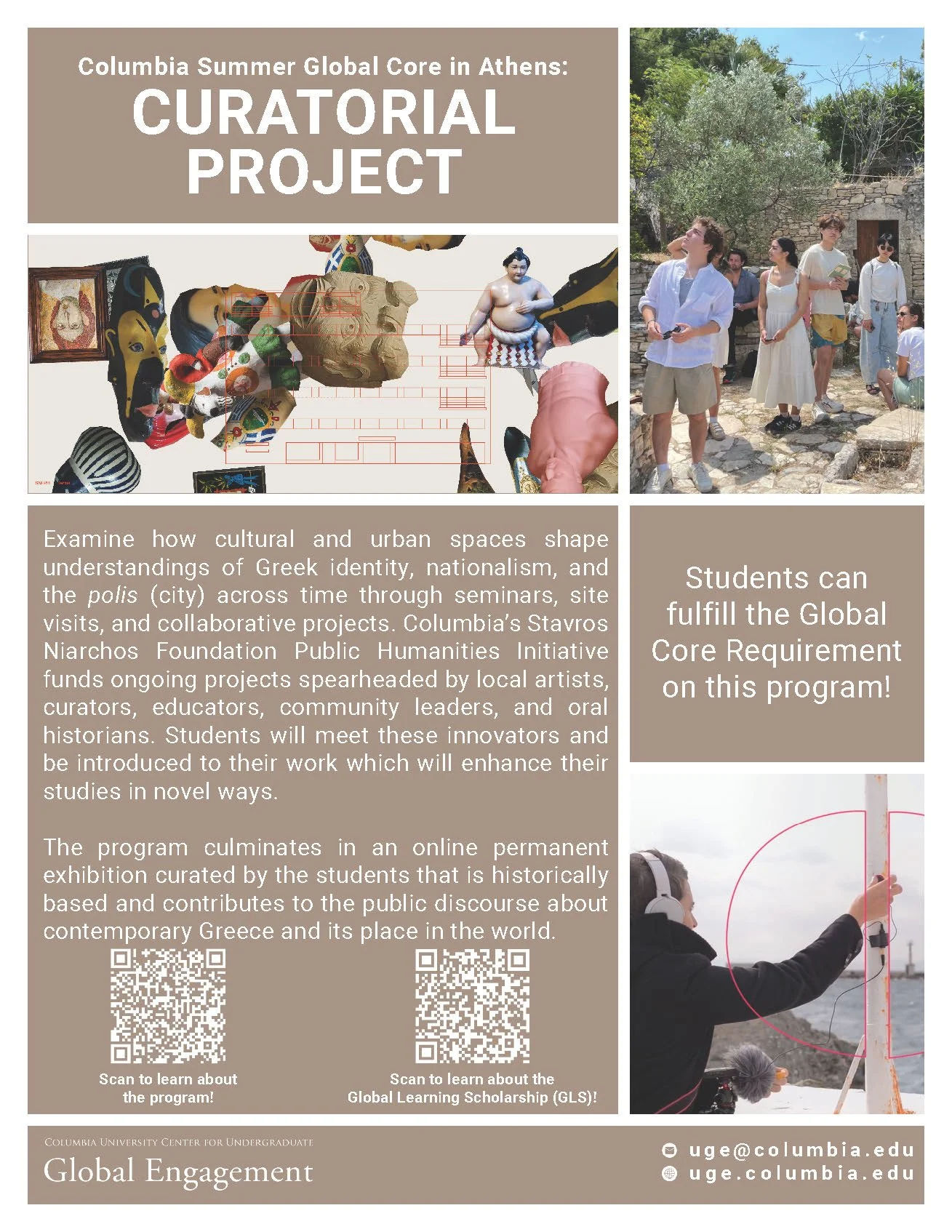
Columbia Global Core in Athens, Curatorial Project Summer 2026 Course
Columbia Summer Global Core in Athens: Curatorial Project
Program: The Columbia Summer Global Core in Athens: Curatorial Project is a three week summer program that offers a Global Core Course: Hellenism and the Topographical Imagination (3 points.) This program takes Athens as a vantage point to consider larger contemporary issues regarding urban planning and nation-making, public life and democracy, climate crisis and displacement, and immigration and the accommodation of cultural alterity. Combine seminar study with field visits to unique locations, meetings with local experts, and the acquisition of practical project-based skills. The program culminates in an online permanent exhibition curated by the students that is historically based and contributes to the public discourse about contemporary Greece and its place in the world.
Application Deadline: Friday, February 13th. Click ‘Apply Now’ on the program website to begin your application.
Info Session: We will hold a virtual info session for the program on Tuesday February 3rd from 2-3pm. Please register here to attend and/or receive the recording afterwards. The recording from the December info session is posted on the program website.
Program Adviser: Students can email the program adviser, Hannah, at hhk2104@columbia.edu with any questions, or to set up an advising appointment.
Funding for Students:
Global Learning Scholarship (Application deadline: February 13, 2026) - Columbia undergraduates (CC/EN/GS) who demonstrate financial need may apply for the GLS that may partially cover the tuition and fees. It is a one page application that is separate from the program application. Students must complete the GLS and program application by the GLS deadline in order to be considered.
Financial Aid - Students should check with their financial aid offices to understand if any federal funding can be used toward their summer program.
Funding by the Athens Global Center is generously provided to cover some program expenses including flights for students.
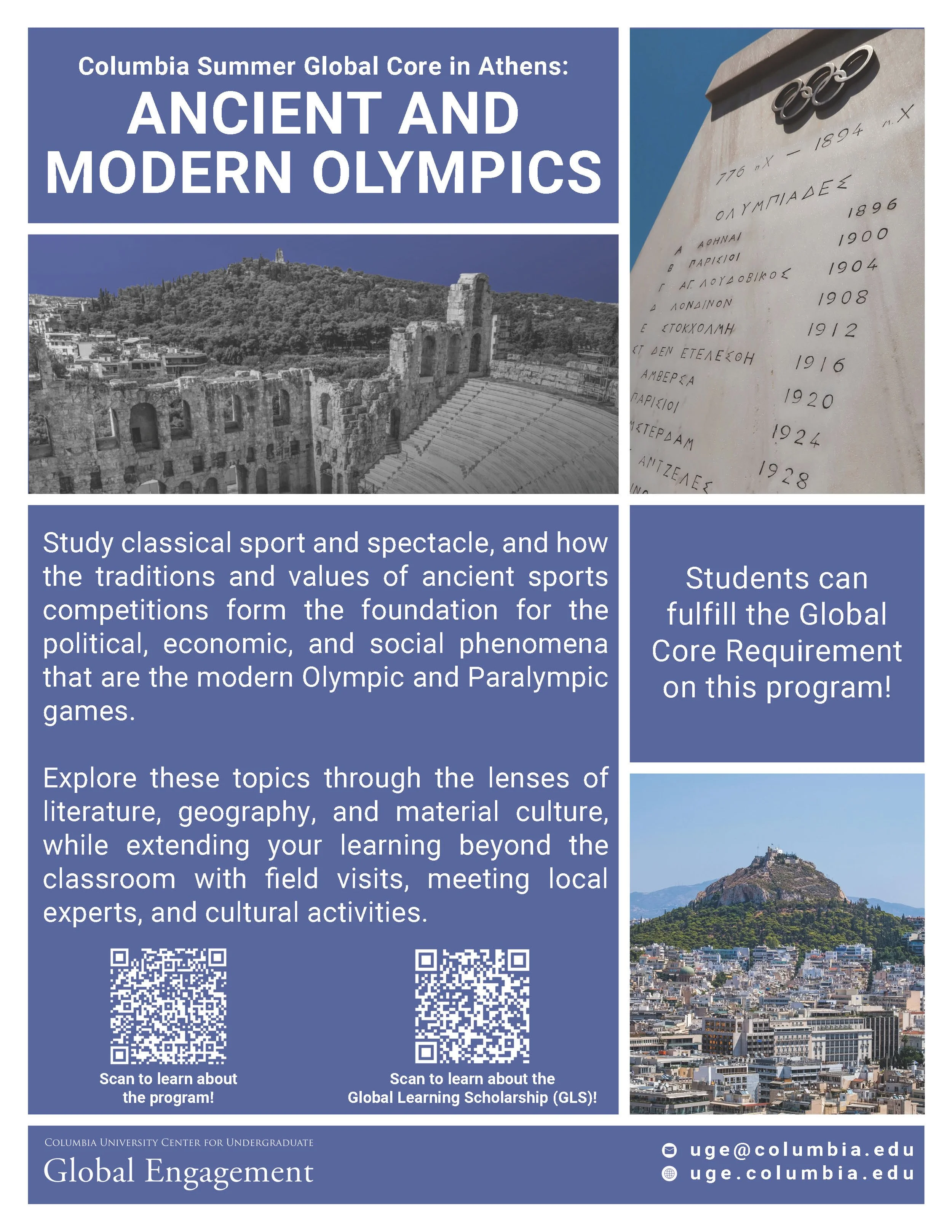
Columbia Global Core in Athens, Ancient and Modern Olympics Summer 2026 Course
Columbia Summer Global Core in Athens: Ancient and Modern Olympics
Program: Columbia Summer Global Core in Athens: Ancient and Modern Olympics is a 4 week program that includes a 3 point Global Core course entitled Ancient and Modern Olympics. This program introduces you to classical sport and spectacle through the lenses of literature, geography, and material culture and considers how sport has shaped political identity, social values, and cultural memory, questions that remain relevant to our understanding of the modern Olympic and Paralympic games today. The choice of Athens as the location will allow the course to be enriched by extending the classroom experience to local museums, exhibits and multiple venues of the Olympic and Panhellenic Games.
Application Deadline: Friday, February 13th. Click ‘Apply Now’ on the program website to begin your application.
Info Session: We will hold a virtual info session for the program on Tuesday January 27th from 11am - 12pm. Please register here to attend and/or receive the recording afterwards.
Program Adviser: Students can schedule an appointment with the program adviser, Hannah, at hhk2104@columbia.edu with any questions
Funding for Students:
Global Learning Scholarship (Application deadline: February 13, 2026) - Columbia undergraduates (CC/EN/GS) who demonstrate financial need may apply for the GLS that may partially cover the tuition and fees. It is a one page application that is separate from the program application. Students must complete the GLS and program application by the GLS deadline in order to be considered
Financial Aid: Students should check with their financial aid offices to understand if any federal funding can be used toward their summer program.
Funding by the Athens Global Center is generously provided to cover some program expenses including flights for students.
Karen Van Dyck: On Translating Ellipsis in C. P. Cavafy’s ‘Che Fece … Il Gran Rifiuto’
Professor Karen Van Dyck wrote an article for Modern Poetry in Translation entitled On Translating Ellipsis in C. P. Cavafy’s ‘Che Fece … Il Gran Rifiuto’; this article was written on translating Cavafy and thinks about why translating minor literature is so important these days.
The article is available online on the Modern Poetry in Translation for all to read via this link.
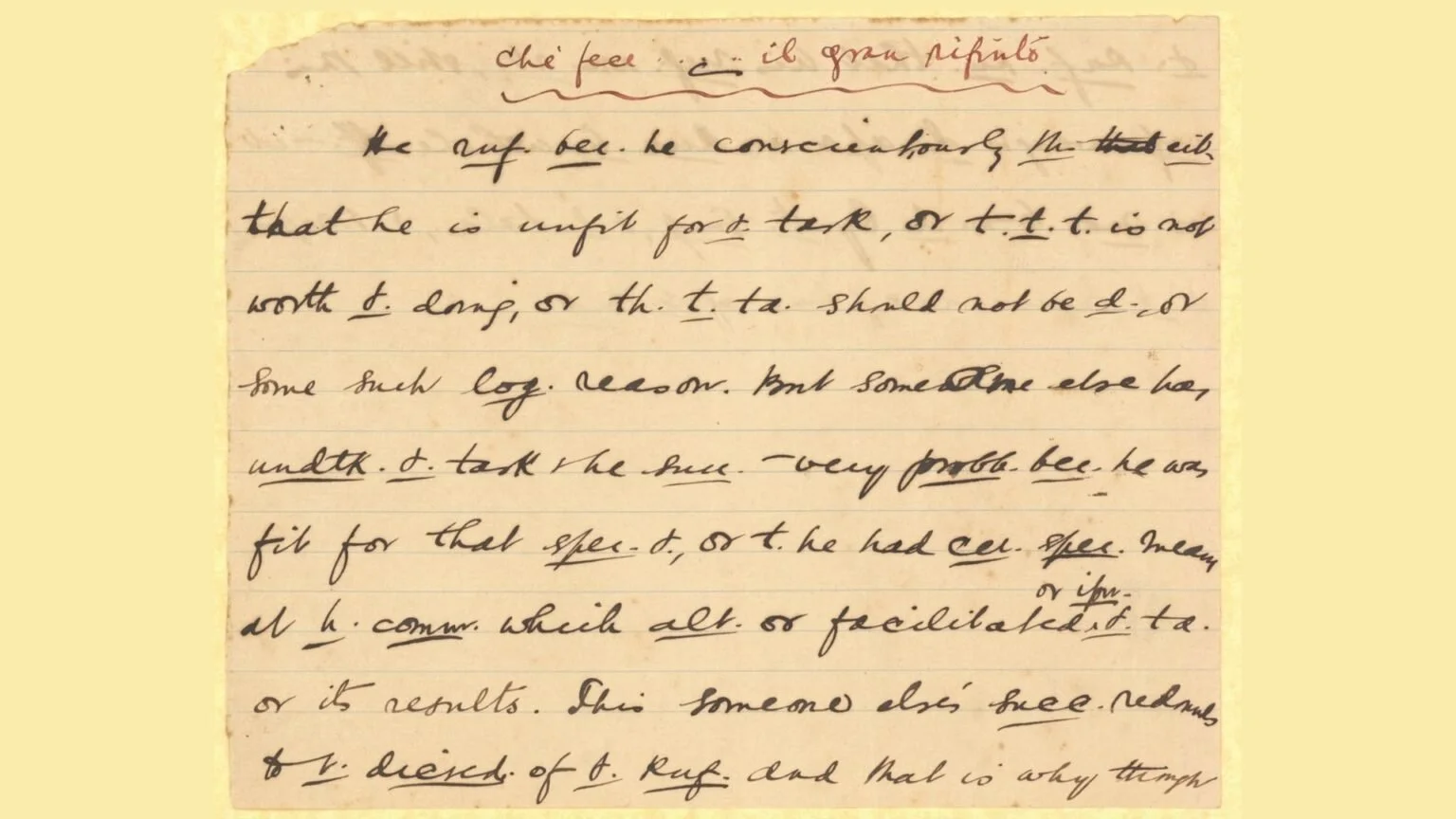
Photo Credit: CC BY-SA 4.0 Cavafy Archive Onassis Foundation