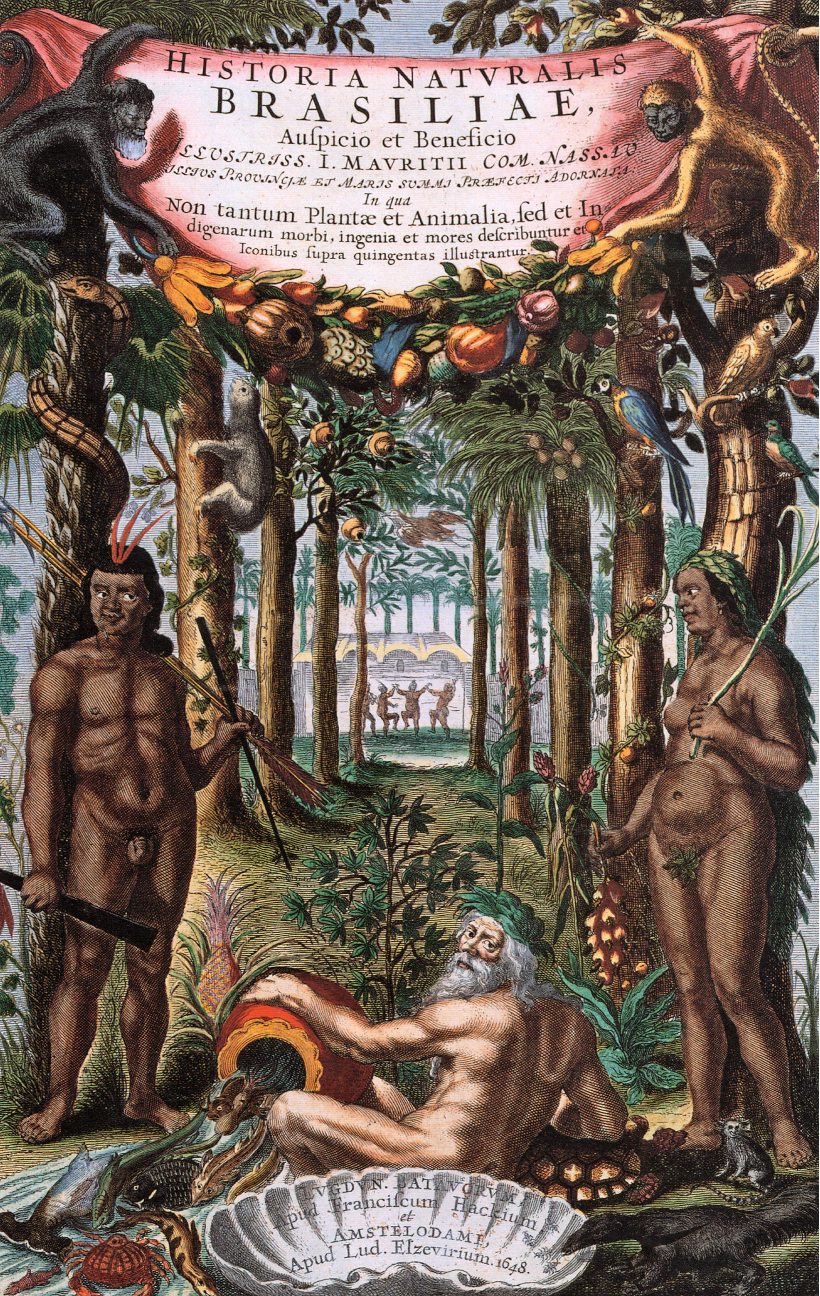
Both before and after vernacular histories of the colonial Americas, the New World was widely read about in Latin. In this talk, I will present and examine the Historia naturalis Brasiliae (1648, “HNB”), a multi-volume Latin treatise on the flora, fauna, and indigenous societies of northeast Brazil, which was under Dutch control between 1630 and 1654. The result of a Dutch imperial network whose officials were invested in Latin learning, the HNB enjoyed wide circulation in northern Europe and beyond, and it was considered as an authoritative treatise until the 19th-century. The widespread assessment that the HNB is an early example of empirical rather than textual methods has influenced the practice of modern scholars, who often mine the text for ethnohistorical insights, sometimes in the hopes of “reconnecting” the information it presents with contemporary indigenous communities. But how and under what conditions was the information compiled in the first place? And why does this matter? I will show that the HNB is rooted in practices of Dutch Latinity, which the authors used as conduits for orienting, systematizing, and supplementing their direct experience of Brazil. The creators of the HNB inventively deployed Greco-Roman literature and taxonomies learned at Leiden University, including Hippocrates’ Airs, waters, places and Pliny’s Natural history, as instruments to communicate the significance of the treatise as well as to channel and delineate information. I will argue that these intellectual conditions undermine a neat picture of empiricism and recontextualize the information presented in the HNB, shedding light on the text as a uniquely Dutch configuration of scientific knowledge at crossroads between the classical tradition, experience, and empire. Attention to the HNB in its intellectual context not only has the potential to illustrate a fundamental episode of the afterlives of ancient authors and their colonial uses; it also offers new avenues to explore the early modern (mis)understanding of the New World, thereby highlighting the relevance of classical studies in the assessment of early modern sources of ethnohistorical information.